More
Top Asking Mistakes Coaches Make
(And
How to Correct Them)
From the book,
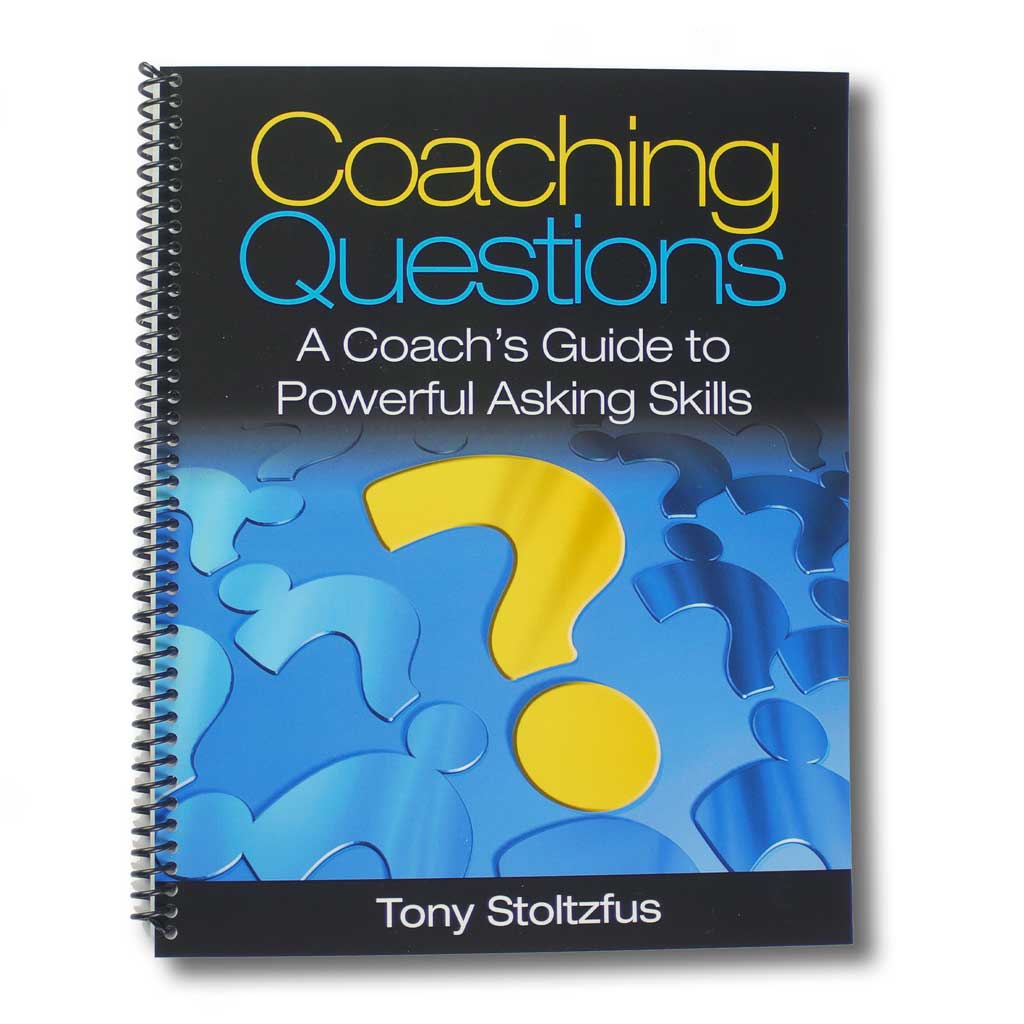
Coaching
Questions: A Guide to Powerful Asking Skills,
by Tony Stoltzfus
In December I shared the top five asking
mistakes I see coaches make (visit the newsletter archive at
www.coach22.com/discovercoaching/ if you missed this article). This month, I
want to share five more, so you have the complete top ten.
6. Rhetorical Questions
Although posed in question form,
rhetorical questions are actually statements (often emotional or judgmental) of
your own opinion of the situation:
§ "What were you
thinking!?!"
§ "Are you really going
to throw away your career like that?"
§ "Isn't that just a
cop out?"
§ "Wouldn't you rather
get along with your spouse?"
Since we aren't really asking for the
other person's opinion, these questions evoke either no response or a defensive
one. Rhetorical questions are generally a sign that you've made a judgement or
developed an attitude about the person you are coaching.
Solution: Reset Your
Attitude
Eliminating rhetorical questions requires
changing your viewpoint, usually in one of two ways. First, you can get in
touch with what is going on inside you, and how this situation is pushing your
emotional buttons. A second approach is renew your internal picture of the
coachee's potential and ability. Spend 15 or 20 minutes on these reflection
questions: to reorient:
§ Why am I forming judgments
here? How is focusing on the negative in this person meeting my own needs? What
can I do about that?
§ Could I be wrong about the
situation? What am I missing?(See if you can construct at least two possible
scenarios where the coachee's point of view on this is more valid than yours.)
§ What potential, ability
and wisdom do I see in this person? What can s/he become? Why am I drawn to
coach him/her?
7. Leading Questions
Leading questions are ones that subtly
point the coachee to a certain answer: the one the coach (knowingly or
unknowingly) wants. While rhetorical are blatantly biased, with leading questions
you may not even realize you've skewed the conversation toward a
"right" answer. What response do you think the coach wants to the
following questions?
§ "How would you
describe that feeling: sad?"
§ "We've spent a fair
amount of time processing this over the last several weeks: are you ready to
make a decision on that now?
§ "Do you want to stay
with this organization you've invested so much in?"
§ "It seems like this
option would feel good today, but the other would give lasting satisfaction:
which one do you want?"
Solution: Multiple Options,
Or the Opposite
One great way to make leading questions
more open is to offer multiple solutions. If you catch yourself asking a
leading question (like, "Name that emotion: are you disappointed?"),
just add several more options on the end: "…are you disappointed, excited,
upset, or what?" With multiple options, the coachee has to choose how to
respond, instead of just assenting to your idea.
Another excellent technique is one I call
"Or the Opposite". If you realize you've just asked a leading
question (i.e. "If you take this new position, will it take time and
energy away from your family?") just add an "or", and then ask
the opposite question: "…Or will this open up doors to get you the kind of
family time you truly want?"
8. Neglecting to Interrupt
No, that's not a misprint. Being too timid
to interrupt and refocus the conversation is more of a problem for beginning
coaches than interrupting too much. While some clients speak concisely, others
can go on for 10 minutes every time you ask an open question. Too much
irrelevant detail slows progress and blurs your focus.
Solution:
Restore the Focus
Part of your job as a coach is managing
the conversation, so when you see the client bunny-trailing, interject with a
question that brings things back to focus. A great step with a talkative client
is to discuss it and get permission to interrupt when needed.
§ "It caught my attention when you mentioned earlier that _______. Let's come back to that."
§ "You are pretty good at expressing yourself. Would you mind if I interrupt occasionally to bring us back to the main topic so that we can make the most of our time?"
9.
Interrupting
The other side of the interruption coin is
that for some of us (often the most verbal or relational personalities)
interrupting is a habit we aren't very aware of. Frequent interrupters tend to
be perceived as dishonoring and frustrating to talk to—not the kind of image
you want to cultivate as a coach! Are you an interrupter? If you want to find out,
here's a revealing exercise. First, record one of your coaching conversations.
Then fast-forward to the middle (by then you'll have forgotten you're recording
yourself), listen to the tape, and make a note every time you hear each of the
three following things:
§ Interruption: I
interrupted or made a comment while the client was still talking
§ Talking Over: I kept
talking when the client tried to interrupt me, or when we both started
simultaneously, I failed to defer to the client
§ Talking For: I finished the
client's thought for him/her
The Solution: Count to Two
Here's a simple discipline you can
practice to break an interrupting habit. Make a commitment that when you are
coaching you will count off two seconds ("one, one thousand; two, one
thousand") after the coachee has stopped speaking before you reply or ask
a question. And if the person begins speaking again before the two seconds is
up, good! Your goal as a coach is not to interject your ideas, but to help the
coachees explore and implement their own.
10. "Why" Questions
"Why" questions tend to make
people clam up because they challenge motives. When you pose a question like,
"Why did you do that?" you are asking the coachee to defend and
justify his actions—so don't be surprised if he gets defensive!
Solution: Use
"What" Instead
It's
easy to rephrase questions to replace the "why" with
"what". Here are several examples of "why" questions that
have been reworded with "what" to keep from putting people on the
defensive:
§ "Why did you turn down the job?"
§ "What factors led you to turn down the job?"
§ "Why do you think she'd respond like that?"
§
"What's causing you to anticipate that
response?"
§ "Why can't you talk to him about that?"
§ "What do you need to talk to him about that?"
Tony Stoltzfus is a long-time
coach, trainer, author and co-founder of a large Christian coach training
school. His personal coaching site is http://www.CoachingPastors.com